
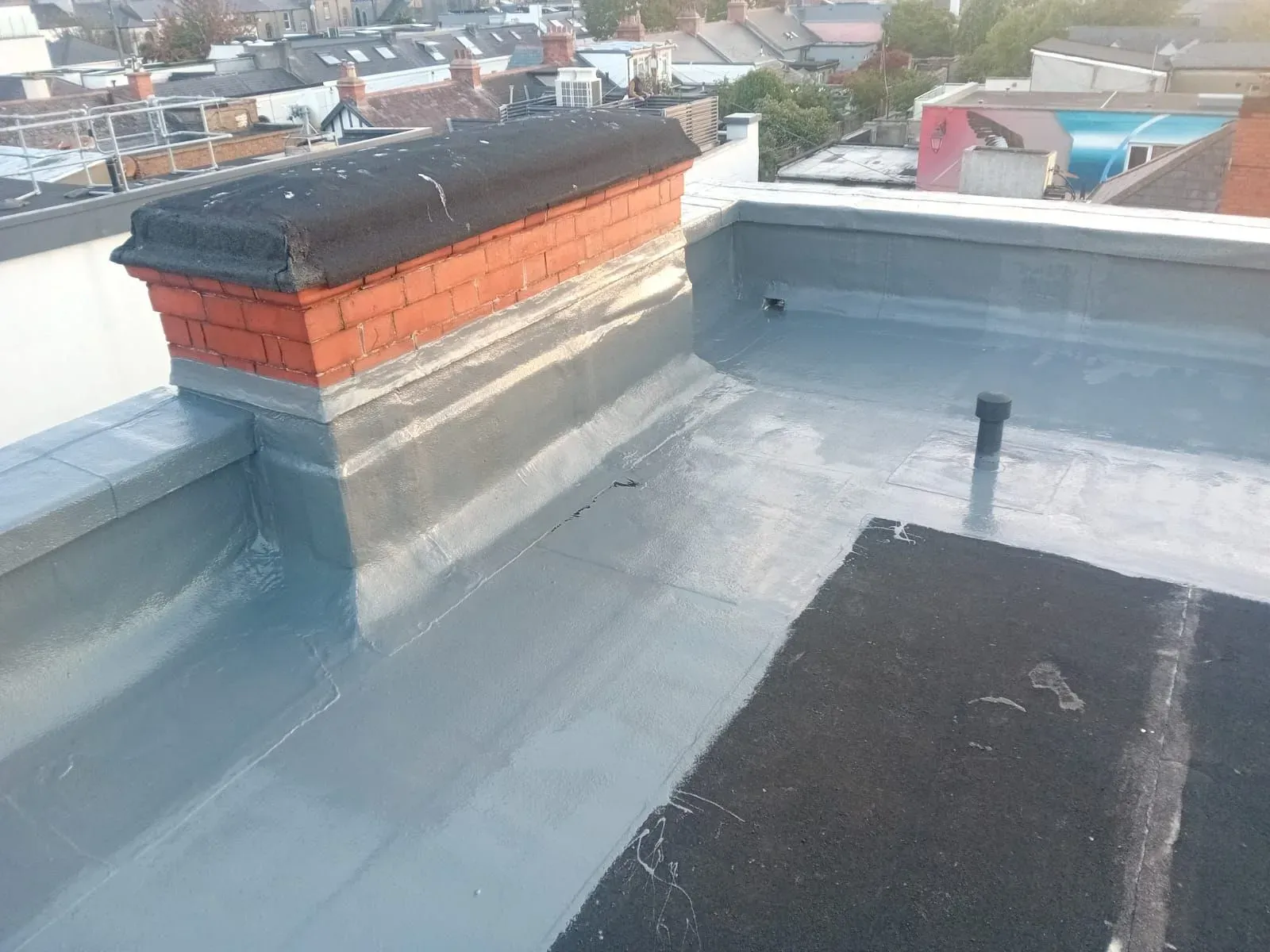
Lead flashing and chimney repair in Dublin.
Most roof leaks start where one thing meets another: a roof against a wall, a stack through the slope, two slopes in a valley. Lead is how those joins are made watertight.
Where the roof meets something
A plain slope sheds water easily. The trouble starts at a join. Where the roof butts a party wall, climbs to a chimney stack or drops into a valley between two slopes, rainwater is collected and has to be steered out. Lead does the steering. It can be dressed tight to any shape, and it lasts for decades if the detail is right.
The details fail in familiar ways. Old lead splits where it has been stretched by the sun. Mortar fillets that were used instead of lead crack and let go. The stack itself takes in rain through failed pointing or a cracked flaunching, and the damp turns up as a stain on the chimney breast two floors down.
This is the characteristic leak of the Georgian and Victorian terrace: lead valleys and parapet gutters that have not been touched in decades. It is also a feature of 1930s–60s semis, where a tall brick stack stands exposed on a hip. A leak at a lead detail is a precise repair, and the cost is for skilled hands rather than materials.
We renew flashings and valleys in lead (Code 4 or Code 5, according to the detail), repoint stacks, rebuild flaunching and refit or replace pots and cowls. We do not chase the symptom. If the leak is only a failed flashing, we say so and price that. On an occupied commercial building, a similar investigation is covered in commercial roofing. You will find the guide figures below.
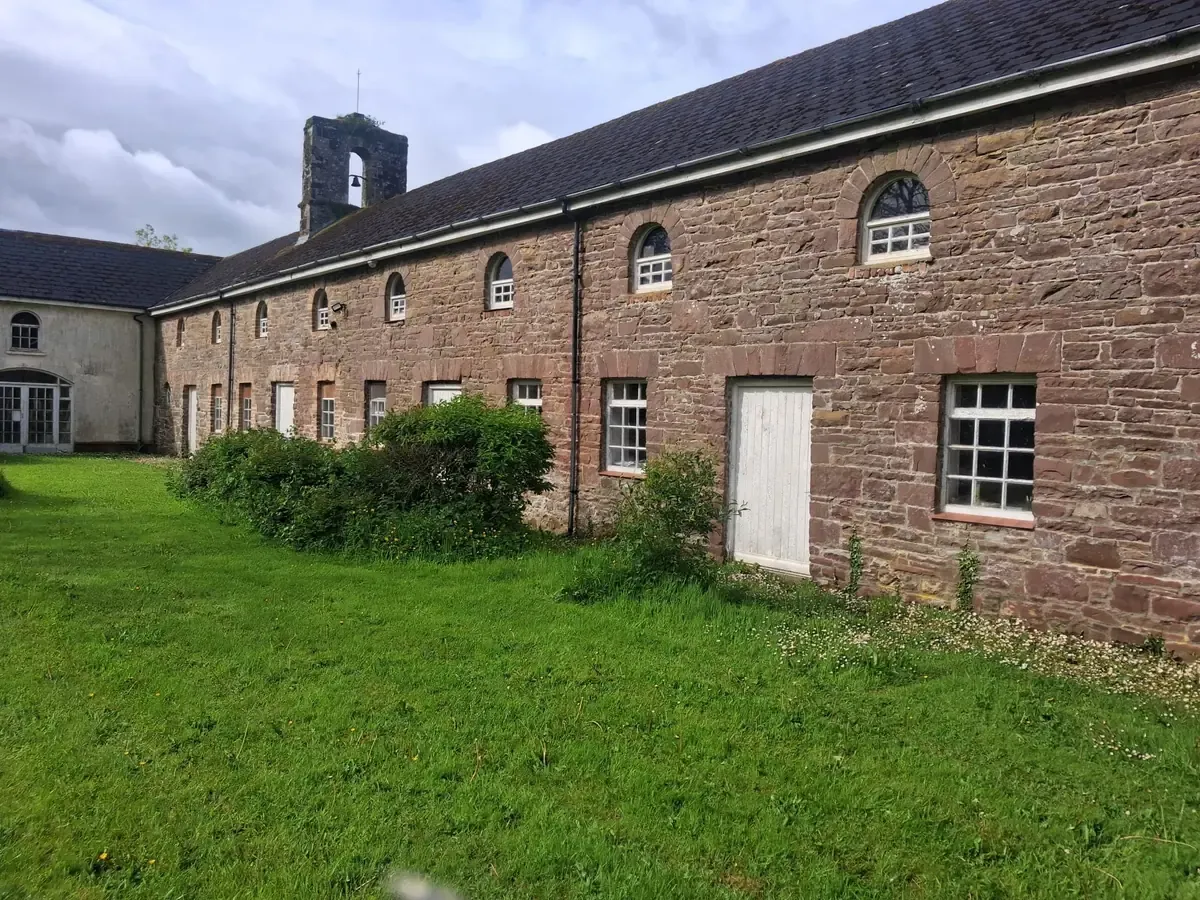
What we do at each detail.
Chimney flashings and aprons
Lead tray, apron and stepped flashings fitted so water is shed to the slates and away from the stack.
Wall and abutment flashings
Lead dressed to the wall and chased in, in place of mortar fillets that crack.
Valleys
A worn lining or blocked valley is rebuilt in lead. Rebuilding a valley takes far longer than replacing a slate, and the price reflects it.
Chimney repointing and flaunching
Loose pointing renewed and the flaunching around the pots rebuilt so the stack stops taking in rain.
Pots, cowls and capping
Pots re-bedded or replaced, and cowls fitted where a stack needs one.
What each price takes in.
The quote is one fixed sum, so the bill at the end matches the paper you signed.
Included in every job
Quoted separately
What this usually costs.
| Service | Indicative price (2026) | Typical duration |
|---|---|---|
| Chimney Repairs | €800–€3,500 | 1–3 days |
| Valley Reconstruction | €1,200–€4,500 | 2–4 days |
Read these as 2026 guide figures, not a quote. The size and slope of a roof, what covers it, how safely we can reach it and what the timbers turn out to be like all move the number. The price you pay is the one written down after the survey, and VAT is added on top at 13.5% for homes.
From the first look to the handover.
Survey
We look at the detail from the slope and the attic, and find out where the water goes in.
Fixed price
A written price for the lead, the pointing and the access.
Repair
The old detail is removed and the new lead dressed, with the stack repointed where needed.
Hand-back
We check it, clear up and send the guarantee.
What people ask us.
Why does my chimney leak?
Usually one of three things: lead flashing that has split or lifted, flaunching round the pots that has cracked, or pointing that has failed and lets the brick soak up rain. A survey sorts which.
What does chimney repair cost in Dublin?
Our 2026 guide figure for chimney repairs is €800–€3,500 plus VAT, taking 1–3 days. Valley reconstruction is €1,200–€4,500, over 2–4 days. The fixed price follows the survey.
Is lead better than mortar at a wall or chimney?
Yes. A mortar fillet cracks as the building moves and as it freezes and thaws. Lead is dressed to move with it and lasts much longer.
What thickness of lead do you use?
Code 4 or Code 5, depending on the detail. We choose the code for the job and say which in the quote.
Can you repair a leaning chimney?
A leaning stack needs to be looked at carefully before anyone works on it. We will tell you what we see, and if an engineer's report is needed, we say so.
How do I know the leak is the flashing and not a slate?
A stain near a stack or wall points at the flashing, while a stain in an open slope points at the covering. The attic shows which side the water entered from.
Is the work guaranteed?
Yes. Lead and chimney repairs carry our 10-year written workmanship guarantee.
Related roofing jobs.
Roof Repairs
A stain on the ceiling or a slate on the path: the spot where water gets in is traced and put right, not painted over.
Emergency Roof Repair
Water coming in or storm damage: the opening is made safe first and the lasting repair follows once the weather lets it.
Roof Replacement
When repairs stop holding, the old covering comes off and a new slate or tile roof goes on, with the Lifetime Leak Guarantee behind it.
Best Roofers Dublin cover Dublin city and county. The survey is free, the price is fixed in writing, and the work carries a written guarantee.
Get your roof
looked at.
Tell us what the roof is doing and roughly where it is. Someone looks at it for free and a fixed written price comes after. Send the form, or ring.